Warnings and Precautions
Hemorrhage
Hemorrhage, including major hemorrhage defined as symptomatic bleeding in a critical area or organ, can occur with OJEMDA. Advise patients and caregivers of the risk of hemorrhage during treatment with OJEMDA. Monitor for signs and symptoms of hemorrhage and evaluate as clinically indicated. Withhold and resume at reduced dose upon improvement, or permanently discontinue based on severity.
Skin Toxicity Including Photosensitivity
OJEMDA can cause rash, including maculopapular rash and photosensitivity. Monitor for new or worsening skin reactions. Consider dermatologic consultation and initiate supportive care as clinically indicated. Withhold, reduce the dose, or permanently discontinue OJEMDA based on severity of adverse reaction.
Photosensitivity
Advise patients to use precautionary measures against ultraviolet exposure such as use of sunscreen, sunglasses, and/or protective clothing during treatment with OJEMDA. Withhold, reduce the dose, or permanently discontinue OJEMDA based on severity of adverse reaction.
Hepatotoxicity
OJEMDA can cause hepatotoxicity. Monitor liver function tests, including ALT, AST and bilirubin, before initiation of OJEMDA, one month after initiation and then every three months thereafter and as clinically indicated. Withhold and resume at the same or reduced dose upon improvement, or permanently discontinue OJEMDA based on the severity.
Effect on Growth
OJEMDA can cause reductions in growth velocity. Growth velocity improved after interruption of treatment with OJEMDA. Routinely monitor patient growth during treatment with OJEMDA.
Embryo-Fetal Toxicity
Based on findings from animal studies and its mechanism of action, OJEMDA may cause fetal harm when administered to a pregnant woman. Advise pregnant women and females of reproductive potential of the potential risk to a fetus.
Advise females of reproductive potential to use effective nonhormonal contraception during treatment with OJEMDA and for 28 days after the last dose, since OJEMDA can render some hormonal contraceptives ineffective. Advise male patients with female partners of reproductive potential to use effective nonhormonal contraception during treatment with OJEMDA and for 2 weeks after the last dose.
NF1 Associated Tumors
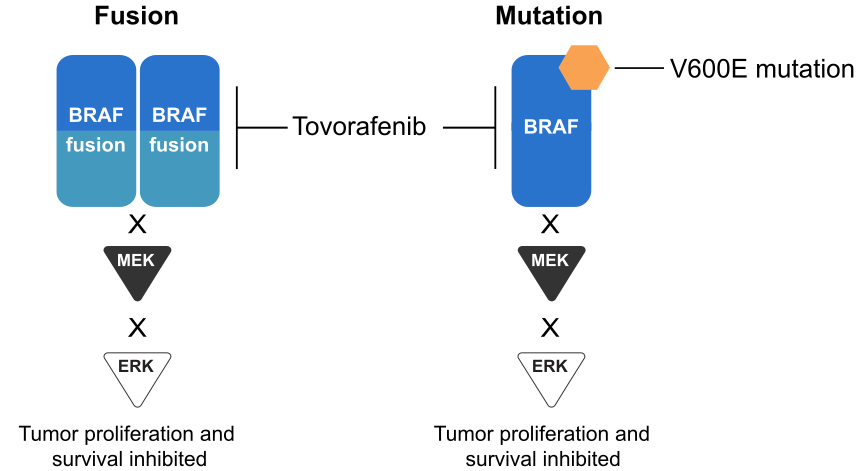
Based on nonclinical data in NF1 models without BRAF alterations, tovorafenib may promote tumor growth in patients with NF1 tumors. Confirm evidence of a BRAF alteration prior to initiation of treatment with OJEMDA.
Adverse Reactions
The most common adverse reactions (≥30%) were rash, hair color changes, fatigue, viral infection, vomiting, headache, hemorrhage, pyrexia, dry skin, constipation, nausea, dermatitis acneiform, and upper respiratory tract infection.
INDICATION
OJEMDATM (tovorafenib) is indicated for the treatment of patients 6 months of age and older with relapsed or refractory pediatric low-grade glioma (LGG) harboring a BRAF fusion or rearrangement, or BRAF V600 mutation.
This indication is approved under accelerated approval based on response rate and duration of response. Continued approval for this indication may be contingent upon verification and description of clinical benefit in a confirmatory trial(s).
Please see full Prescribing Information.